Property investors rarely evaluate a residential purchase in complete isolation. For those building a broader portfolio, a new apartment can affect the balance between income-producing assets, growth-oriented investments, and available capital. The decision therefore involves more than identifying an attractive development; it requires understanding how a particular property fits within an investor’s overall strategy.
For investors considering Lucerne Grand and Amberwood at Holland, examining portfolio fit can provide another useful perspective when comparing individual residential opportunities.
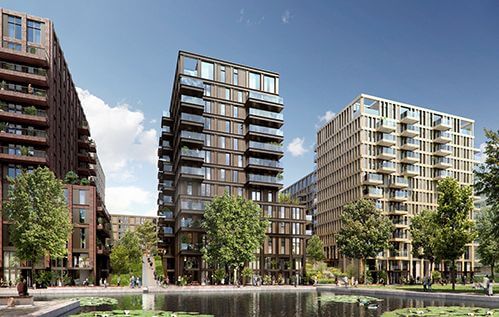
Assessing Property Exposure
Residential real estate can represent a substantial concentration of capital. Unlike smaller financial investments that can often be bought or sold in increments, a single property may account for a significant portion of an investor’s assets.
Before purchasing Lucerne Grand, an investor should consider the size of the proposed property allocation relative to existing holdings. A unit that requires excessive leverage or absorbs most available capital may create financial concentration even if the underlying property is attractive.
The same principle applies to Amberwood at Holland. Buyers should evaluate whether acquiring the property creates an appropriate level of exposure to residential real estate or adds too much concentration to one market segment.
This portfolio-level assessment can help investors distinguish between a good property and a suitable investment for their particular financial position.
Balancing Income and Capital Growth Objectives
Residential properties can serve different investment purposes. Some investors prioritize recurring rental income, while others are more focused on potential long-term capital appreciation. Many aim for a combination of both.
For Lucerne Grand, investors can examine whether the expected rental characteristics of a unit align with their income objectives. Unit configuration, tenant demand, operating expenses, and financing costs can all affect the income component of the investment.
At Amberwood at Holland, purchasers can use the same framework while considering the potential role of the property within their wider portfolio. A property intended primarily for rental income should be assessed differently from one purchased mainly for long-term ownership and potential resale.
Clearly defining the investment objective helps determine which property characteristics deserve the greatest weight.
Geographic and Market Concentration
Owning multiple properties in closely related markets can increase exposure to the same economic conditions. If rental demand, employment patterns, property supply, or buyer affordability weaken in one area, several assets may be affected simultaneously.
An investor adding Lucerne Grand to an existing property portfolio should therefore consider whether the new asset increases geographic or market concentration.
For Amberwood at Holland, the same question applies. Investors with several similar residential properties may need to consider whether another comparable asset improves diversification or simply increases exposure to the same market dynamics.
Diversification does not eliminate property risk, but it can help investors avoid relying too heavily on a single segment.
The Role of Leverage
Borrowing can increase an investor’s purchasing capacity, but it can also amplify financial risk. Mortgage repayments remain obligations even when rental income declines or a property is temporarily vacant.
For an investment in Lucerne Grand, buyers should assess how the proposed loan affects overall portfolio leverage rather than examining the mortgage in isolation. Interest expenses, repayment schedules, and potential changes in financing conditions should be included in the analysis.
Investors considering Amberwood at Holland should conduct the same assessment. A property may appear affordable based on the required initial capital while creating a significantly larger long-term debt obligation.
Maintaining appropriate borrowing levels can be particularly important when an investor already owns leveraged properties.
Liquidity and Available Capital
Residential property can require substantial capital not only at purchase but throughout the holding period. Investors need sufficient reserves for maintenance, financing obligations, vacancies, and unexpected expenses.
Before committing to Lucerne Grand, buyers should consider how much liquid capital would remain after the acquisition. Retaining adequate reserves can provide greater flexibility if market conditions change or unexpected property expenses arise.
The same consideration is relevant to Amberwood at Holland. Investors should avoid allocating so much capital to the property that they have limited resources available for other investments or ownership-related costs.
A balanced portfolio requires both invested assets and sufficient financial liquidity.
Comparing Property Against Alternative Investments
The decision to buy a residential property also involves an opportunity cost. Capital allocated to Lucerne Grand could otherwise be deployed elsewhere, just as capital used for Amberwood at Holland could potentially support another investment or financial objective.
This does not mean property should be compared solely with financial-market assets. Instead, investors should consider the expected income, costs, risk, liquidity, and investment horizon associated with each available option.
Such comparisons can clarify whether the proposed property acquisition strengthens the overall portfolio or simply duplicates existing exposure.
Building a Long-Term Property Strategy
Portfolio construction should account for the intended holding period and future investment plans. An investor purchasing Lucerne Grand may eventually seek another property, refinance an existing asset, or sell a weaker-performing investment.
Similarly, acquiring Amberwood at Holland should be considered within the context of potential future purchases and changes in financial circumstances.
A property strategy can remain flexible while still being guided by clear objectives, appropriate leverage, manageable costs, and reasonable diversification.
Conclusion
Residential property can play an important role in an investment portfolio, but the suitability of a particular unit depends on more than its individual characteristics. Capital concentration, income objectives, geographic exposure, leverage, liquidity, and opportunity cost all deserve consideration.
For investors evaluating Lucerne Grand and Amberwood at Holland, viewing each property as part of a wider portfolio can lead to a more disciplined decision. Instead of asking only whether a development is attractive, investors can assess whether the specific property complements their existing assets and supports their broader long-term investment strategy.

